21. What is vertical farming and why is it different from hydroponics
Vertical farming is one of the most discussed innovations in modern agriculture. It is often confused with hydroponics, but they are actually two different concepts: hydroponics is a growing technique, while vertical farming is a model of production and organization of space.
To truly understand its value, one needs to distinguish between the two.
What is vertical farming?
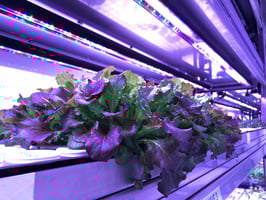
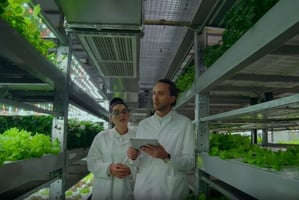
Vertical farming is an indoor cultivation method that organizes plants on multiple vertical levels within closed, controlled structures.
The goal is to maximize productivity per square meter, reduce waste and ensure consistent year-round production.
In a vertical planting system, they are managed automatically:
-
light
-
water
-
nutrients
-
temperature
-
humidity
-
air circulation
Everything is designed to create a replicable and highly efficient environment.
What is meant by hydroponics instead?
Hydroponics is a soil-less growing technique in which roots are submerged or periodically bathed in a balanced nutrient solution.
It is a growth mode, not a structure.
Hydroponics can be used:
-
in a traditional horizontal greenhouse
-
in an outdoor facility
-
in a small piece of a balcony
-
or... inside a vertical farm
Vertical farming and hydroponics are not alternatives: they often coexist.
The key differences between vertical farming and hydroponics
| Appearance | Hydroponics | Vertical Farming |
|---|---|---|
| Definition | Soilless cultivation technique | Multilevel structure and controlled environment |
| Objective | Feed roots efficiently | Maximize productivity and consistency of production |
| Where to use | Indoor or outdoor | Indoor only |
| Integrated technologies | Nutrients, pumps, sensors | LED lighting, climate control, automation, hydroponics or aeroponics |
| Scalability | From small domestic plant to industrial greenhouse | Needs dedicated infrastructure |
In short: all hydroponics can take place without vertical farming, while all vertical farming uses at least one hydroponic technique.
Why vertical farming is a revolution from classical hydroponics
Hydroponics improves the efficiency of cultivation, but does not solve problems such as:
-
soil availability
-
space utilization
-
total control of climate
-
production density
Vertical farming, on the other hand, allows:
1. Productivity up to 10-20 times higher
Increasing levels means multiplying usable space.
2. Total climate control
Temperature, humidity and CO₂ are digitally regulated: no dependence on weather.
3. Almost total elimination of pesticides
Closed environments → very low risk of contamination.
4. Constant year-round production.
No seasonality, no interruptions.
5. More uniform quality
Light, water and nutrients arrive identically on every level: less variability, more precision.
Is vertical farming always cost-effective?
No.
It requires significant investment, technical expertise, artificial lighting and climate management.
This is why many vertical systems fail: the technology is complex and operating costs can be prohibitive without a highly efficient, automated system.
This is where integrated solutions like Tomato+, which combine hardware, automation, AI and precise data management, make a sustainable and scalable model possible.
Conclusion
Hydroponics is how we grow.
Vertical farming is where we grow.
Combining the two technologies makes it possible to:
-
use fewer resources
-
produce more food in less space
-
achieve consistent quality 365 days a year
It is the basis for the agriculture of the future: urban, scalable and climate-independent.
Thank you for reading this article. Keep following us to discover new content on hydroponics, vertical farming, and smart agriculture.
Tomato+ Team