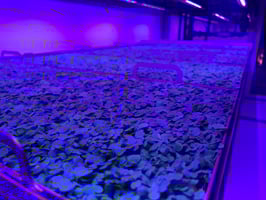
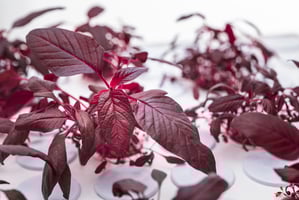
Hydroponics is not just an innovative method of growing without soil: it is a technology destined...
29. Vertical Farming business models: which ones really work and which ones don't
29. Vertical Farming business models: which ones really work and which ones don't
7:09
Vertical farming is not just a technology: it is a completely new industry model.
And like any new industry, its success depends much more on the business model than on the plant itself.
Over the past decade, different approaches have emerged, some sustainable, others doomed to fail from the start.
In this article we look at the most popular business models, their structural strengths and limitations-and how the arrival of automation and AI is creating new scalable opportunities.
1. The "Farm as a Factory" model (pure manufacturing)
This is the most intuitive model: build a vertical farm, produce salad and sell it.
How it works
-
Direct sales to large-scale retail chains and retailers
-
Focus on high volumes and low costs
-
Medium to large plants, from thousands of square meters
Strengths
-
Total control over quality
-
Year-round local production
-
Relatively stable prices
Structural limitations
-
Very high CAPEX
-
High OPEX (labor, energy, maintenance)
-
Low margins for "commodity" products
Many farms fail because they try to compete on price with traditional producers, but with a much higher cost structure.
2. The "Premium + Differentiation" model.
Here the goal is not to produce lots of vegetables, but to produce the best possible vegetables.
How it works
-
Sales to chefs, starred restaurants, hotellerie
-
Focus on rare varieties, hyper-fresh, intense flavors
-
Small batches but very high value
Strengths
-
Much higher margins
-
Customers willing to pay for quality and consistency
-
Solid brand positioning
Limitations
-
Limited market
-
Requires strong business relationship
-
Complex scalability if system is not automated
Ideal model for small producers or boutique farms, but not sufficient for global scalability.
3. The farm-to-store model: mini-farms integrated into distribution.
Large-scale retailers are experimenting with small in-store facilities.
How it works
-
The farm is installed in the supermarket
-
Production and sales in the same place
-
Complete elimination of logistics
Strengths
-
Always fresh vegetables
-
Drastic cut in waste
-
High marketing value (transparency + sustainability)
Limitations
-
Management complexity
-
Unskilled staff
-
Expensive facilities to maintain and upgrade
If technology is not autonomous and self-managed, it becomes unmanageable.
4. The "Farm-as-a-Service" model: the producer becomes a service
The farm is no longer an asset to be sold: it is a subscription service.
How it works
-
Installation of the farm at companies, hotels, schools, hospitals
-
The provider takes care of management, maintenance and consumption
-
The customer pays a monthly fee to have vegetables always available
Strengths
-
Recurring revenue
-
High retention
-
Scalability of the service
Limitations
-
Requires robust technical infrastructure
-
Operating costs if sufficient automation is not present
-
Depends on quality of software and sensors
Is one of the most promising models, but works only if highly automated.
5. The AI-first and data-driven model.
It is the emerging model and the one with the most scalable potential, supported by technology.
How it works
-
Every plant (small or large) becomes a data node
-
AI monitors growth, microclimate, lighting and nutrients
-
Growth Plans are updated in real time and improve with the network effect
-
The business sells not just vegetables, but software, know-how, optimization, quality standards
Strengths
-
High margins (services)
-
Global scalability with very low marginal costs
-
Natural lock-in: plant operates at maximum only with proprietary software
-
Collected data continuously increase the value of the ecosystem
Limitations
-
Requires advanced technology on the hardware, firmware and cloud side
-
Requires a network of widespread deployments to train AI
-
Is a model for companies that want to grow as a platform, not just as manufacturers
6. The "Hardware + Pods" model: integrated platform (Nespresso style)
It is a hybrid model that combines hardware, consumables, and software:
One of the most robust for generating recurring revenues.
How it works
-
Sale of the greenhouse
-
Recurring sale of the compostable pods
-
Software (free/plus/enterprise) to control and optimize growth
-
Closed, fully integrated ecosystem
Strengths
-
Recurring revenues from consumables
-
Simplicity for the end user
-
Data collected every cycle
-
Predictable margins
Limitations
-
Requires efficient production of pods
-
Requires continuous R&D for new varieties and growth plans
Is the model that maximizes both scalability and quality control.
7. Which models will really work in the next 10 years?
Winners:
-
AI-first models
-
Platform models (Hardware + Software + Pods)
-
Recurring models (Farm-as-a-Service, subscriptions)
-
High-value premium manufacturing
Because they create network effect, scalability, superior data and margins.
Destined to suffer:
-
Production-only farms that compete on price
-
Farms without internal automation
-
Models that depend on a lot of labor
The future of vertical farming is hybrid: not who grows the most, but who grows the best, with less cost and more data wins.
The Tomato+ model as a synthesis of winning models
Tomato+ combines the advantages of all previous models while eliminating their weaknesses by integrating proprietary hardware, compostable pods, automation, and AI cloud.
1. From pure production
✔ Consistent quality
✔ Controlled microclimate
✘ Without mega-investments.
Thanks to distributed and autonomous farms, no need for giant plants.
2. From premium
✔ Gourmet varieties
✔ Superior flavor
✔ Global repeatability
Multispectral LED + Growth Plan AI technology ensures identical results everywhere.
3. Farm-to-Store
✔ Zero logistics
✔ Instant freshness
✔ No operational complexity
Automation cuts labor requirements by 90%.
4. From Farm-as-a-Service
✔ Recurring revenue (software + waffles)
✔ Remote monitoring
✔ Natural lock-in.
Farms become nodes in a network, not isolated machines.
5. From the AI-first model
✔ Continuous improvement
✔ Network effect on each installation.
✔ Perpetually expanding growth database.
Each greenhouse increases the value of the entire system.
6. From the capsule model
✔ Proprietary consumables
✔ Predictable margins
✔ Perfect user experience
Compostable pods ensure standard, simplicity and continuity.
Tomato+ does not choose one model: it integrates and enhances them, becoming a complete platform for smart agriculture.
Conclusion
Vertical farming is no longer (just) an agricultural topic: it is a technology sector based on data, AI, automation and hardware-software integration.
The most scalable business models are those that:
-
generate continuous value
-
collect data
-
improve automatically
-
create positive lock-in
-
increase the efficiency of the entire ecosystem
The key shift is one: from farm as a machine to farm as a platform.
Thank you for reading this article. Keep following us to discover new content on hydroponics, vertical farming, and smart agriculture.
Tomato+ Team