18. How to choose a truly plant-friendly LED
Light is the most important factor in a hydroponic system: it is the primary energy that determines the speed, morphology and quality of growth.
A wrong LED means high consumption, stressed leaves, slow growth, and wasted nutrients.
A correct LED, on the other hand, transforms cultivation into a stable, productive, and highly efficient system.
In this article you'll find out what really matters when choosing an LED lamp for indoor growing and why modern technologies-such as those adopted by Tomato+-are revolutionizing the industry.
1. The light spectrum: the heart of it all
Many commercial LEDs call themselves "full spectrum," but this label alone is not enough.
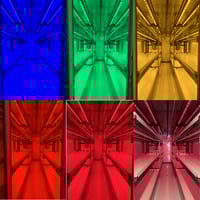
Plants do not take advantage of light uniformly: you need differentiated light channels that can be adjusted and balanced exactly on the physiological processes of growth.
Here's how each color contributes to development:
-
Blue - compacts the plant, improves morphology, produces thicker leaves
-
Yellow - supports photosynthesis and brings uniformity in early stages
-
Amber - stimulates pigments, aromas and aromatic compounds (crucial for basil and aromatics)
-
Green - penetrates deep layers of foliage, unifying development
-
Red - increases leaf area, growth rate and final yield
-
Far-red - regulates photomorphogenesis and influences "shade avoidance "* response.
* Shade avoidance: when the plant perceives too much far-red, it interprets that it is in shade relative to other plants and stretches to compete. Managing far-red allows you to control height and structure, keeping plants compact and productive.
LEDs with only 2-3 channels do not allow true spectrum control.
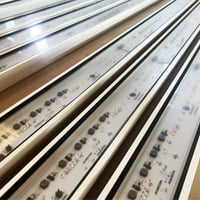
In contrast, the 6-channel Tomato+ LEDs with independent curves allow precise spectrum for each variety-even multiple combinations in the same cycle.
2. PPFD and distribution: light must be uniform
An LED may claim a very high PPFD, but if it concentrates it in the center of the surface it creates:
-
hotspots
-
leaf burns
-
uneven growth
What really matters is uniformity.
Tomato+ systems integrate spectrometer and on-board LED chamber to:
-
detect light distribution
-
analyze plant height and condition
-
automatically balance the intensity
This ensures perfectly distributed light on every floor.
3. Cooling: the point that makes the difference in consumption
Most LEDs get too hot.
Heat = energy waste + lower efficiency + risk of damaging leaves.
Cooling is therefore critical.
Liquid-cooled LEDs: the technology that halves consumption
In the Horto Professional model, Tomato+ uses liquid-cooled LEDs.
This system offers two key advantages:
-
it keeps the LEDs at the optimum temperature of maximum efficiency
-
allows them to get very close to the plants without risk of thermal stress
The result?
Electricity consumption reduced by up to 50 percent compared to traditional air-cooled LEDs.
It means real and continuous savings, cycle after cycle.
In other words: more output, less energy.
4. Dynamic light control: the intelligent LED.
The new generation of LEDs is not just a lamp, but an intelligent system:
-
automatically adjusts the light channels
-
adapts the spectrum to the growth phase
-
applies dynamic photoperiods
-
dialogues with sensors and AI
-
intervenes to correct potential stresses
The Tomato+ LED module integrates:
-
6-channel spectrum
-
spectrometer
-
camera for AI
-
dedicated firmware
-
control via software and cloud
-
optimization via Dynamic Growth Plans
This means that the light changes according to the way the plant is growing, not according to a timer.
5. Real efficiency: what to watch (and what to ignore)
Many manufacturers increase watts to look "more powerful."
In hydroponics, watts do not matter: in fact, they are often a problem.
The parameters you need to evaluate are:
-
µmol/J efficiency
-
PPFD uniformity
-
cooling
-
tunable spectrum
-
actual lifetime of the LED
An efficient LED illuminates better, consumes less, and avoids waste.
Final checklist: how to recognize a really good LED
Look for:
-
spectrum with at least 5-6 distinct channels
-
independent adjustment of channels
-
uniform PPFD
-
advanced cooling (liquid cooling is best)
-
optimized power consumption
-
intelligent control via software
-
compatibility with data, sensors and AI
Avoidance:
-
generic "full spectrum" LEDs
-
high wattages passed off as power
-
LEDs with hotspots or uneven light
-
insufficient heat sinks
-
non-integrated solutions
Why Tomato+ uses proprietary LEDs
Internal technical documents show that Tomato+ uses LEDs:
-
6 independent channels
-
with integrated spectrometer
-
with AI chamber
-
liquid-cooled
-
with dynamic control of Growth Plans
-
optimized for energy efficiency (-50%)
-
designed to be scalable and extremely stable
This makes Tomato+ greenhouses among the world's most efficient in compact indoor growing.
Conclusion
The choice of LED determines the outcome of cultivation: quality, yield, speed and consumption.
Today there are LEDs that not only illuminate, but understand plants and adapt to them-just like those implemented by Tomato+.
Light becomes an intelligent system.
Cultivation, efficient at last.
Thank you for reading this article. Keep following us to discover new content on hydroponics, vertical farming and smart farming.
Tomato+ Team