48. How to manage indoor hybrid hydro-air systems
Hybrid hydro-aero indoor systems combine two distinct but complementary approaches:
-
hydroponics, which provides nutritional stability and chemical control
-
aeroponics, which maximizes root oxygenation and growth rate
This architecture is not "more advanced" by definition: it is more powerful, but only if managed with strict criteria. Otherwise, it amplifies errors and instability.
1. What is really a hybrid hydro-aero system
A hybrid system is not a middle ground, but a functional separation:
-
Upper zone (canopy): classic indoor management (LED, VPD, airflow)
-
Root zone:
-
liquid phase → continuous supply of nutrients (hydro)
-
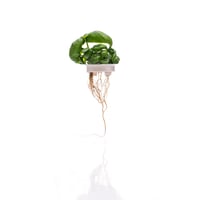
Nebulized phase → extreme oxygenation and metabolic stimulation (aero)
-
The common mistake is to treat it as "improved hydroponics." It is actually a biphasic system, with different operational logic.
2. Proper system architecture
To function, a hydro-aero hybrid must adhere to three structural principles.
(a) Separation of circuits.
-
Nutrient circuit (reservoir, EC, pH)
-
Atomization circuit (pressure, nozzles, duty cycle).
Never share pumps or control logic.
(b) Sealed root chamber.
-
Zero light (anti-algae)
-
Controlled humidity
-
Rapid drainage: roots must never remain submerged
(c) Redundancy.
In aeroponics, a standstill of a few minutes can cause root collapse.
The following are mandatory:
-
double pump
-
pressure sensors
-
automatic hydroponic fallback
3. Nutritional management: the critical point
In hybrid systems, nutrition should be simplified, not complicated.
-
Lower target EC than pure hydro
-
higher frequency, lower concentration
-
Stable microelements (quality chelates).
Aeroponics increases uptake: if you keep "standard" EC, you go into invisible overfeeding.
4. Timing: when to use hydro, when to use aero
The real advantage of hybrid is dynamic phase management.
| Phase | Dominant mode |
|---|---|
| Germination | Hydroponics |
| Early vegetative | Hydro + light aero |
| Active growth | Aero dominant |
| Stress/recovery | Hydro |
| Pre-harvest | Modulated aero |
A static system is inefficient. A hybrid system must change over time.
5. Essential sensors.
Without adequate sensors, a hybrid is unmanageable.
Minimum indispensable:
-
solution temperature
-
root chamber temperature
-
spray pressure
-
root wetting time
-
dissolved oxygen (optional but strategic)
Data are not for "monitoring," but for anticipation.
6. Most common (and costly) mistakes.
-
Thinking that aeroponics will "speed everything up"
-
Not anticipating hydroponic fallback
-
Using nutrients that are too concentrated
-
Neglecting to sanitize nozzles
-
Applying the same parameters to all varieties
A hybrid system does not forgive approximations.
7. When it makes sense to use a hydro-aero system
It is the right solution if:
-
you work in R&D or high-value varieties
-
you want shorter cycles with the same quality
-
you have automation and advanced software control
-
you can afford initial design and tuning
It is not the right choice for:
-
beginners
-
manual installations
-
low-cost production
Operational conclusion
Indoor hydro-aero systems are not a fad, but precision tools.
They work only if treated as such: serious design, continuous control, data-driven logic.
Those who oversimplify them make them unstable.
Those who govern them correctly achieve out-of-scale performance.
Thank you for reading this article. Keep following us to discover new content on hydroponics, vertical farming, and smart agriculture.
Tomato+ Team